The Benefits of Learning Through Play
By [New World Of Discovery]
In the early years of life, when children are exploring the world around them with curiosity and joy, play is far from frivolous—it’s foundational. Research consistently shows that play is one of the most powerful ways children learn. firstthingsfirst.org+1 At NWODC, we embrace this truth, designing everyday activities that allow children to learn through play — and grow in every meaningful way.
🧠 1. Cognitive Development & Executive Function
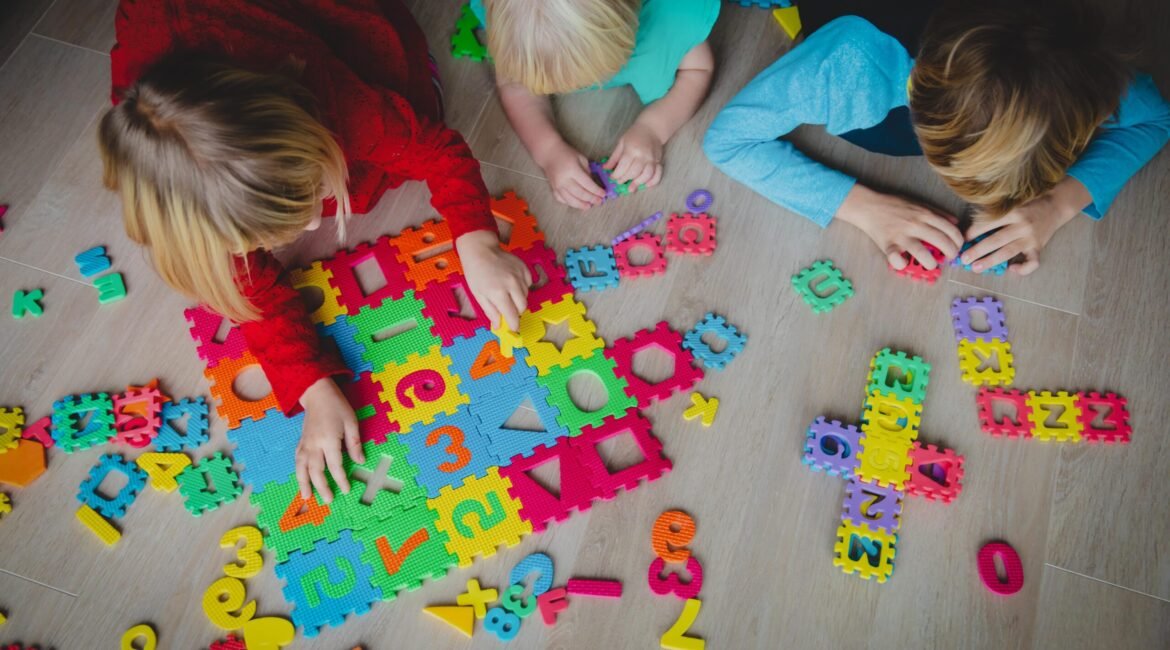
When children manipulate blocks, engage in imaginative role‑play or experiment with sensory materials, they’re doing more than having fun. They’re practicing how the world works: cause and effect, spatial reasoning, memory, problem‑solving and more. For example, a child stacking blocks is building their understanding of balance and geometry, while also honing attention and flexible thinking. CHC Services+2PlayToDevelop+2 Researchers found that play stimulates brain development at molecular and behavioral levels, supporting executive functions like self‑regulation, decision‑making and planning. National Institute for Play+1
🏃♀️ 2. Physical & Motor Growth
Active play—running, jumping, climbing, balancing—is key to developing strength, coordination, agility and body awareness. While tossing a ball might look like just fun, it’s teaching gross motor skills; while threading beads or manipulating clay, children refine fine motor control. Healthline At the same time, movement energizes the body and supports healthy physical development, which in turn supports a child’s readiness to learn and participate.
🤝 3. Social Skills & Emotional Growth
Play gives children a rich, natural environment to test out social roles, negotiate rules, cooperate, share ideas and regulate emotions. During make‑believe games and peer interactions, children practice empathy, learn to listen, wait, take turns and resolve conflict. Pediatrics+1 This lays the groundwork for healthy relationships, self‑esteem and the emotional resilience needed to meet new challenges with confidence.
🎨 4. Creativity, Imagination & Intrinsic Motivation
In play, children are not simply following an adult’s instructions—they are the authors of their own adventures. They choose roles, solve emerging problems, invent stories and test materials in ways that make sense to them. This self‑directed exploration builds motivation from within, supports creativity and nurtures a lifelong love of learning. learningthroughplay.com+1
🌍 5. Equity & Long‑Term Value
Research spanning many countries shows that play‑based learning isn’t just beneficial—it can be one of the most cost‑effective strategies for early childhood development. It supports children regardless of their background and helps reduce developmental gaps. weforum.org
✅ How We Support Learning Through Play
At New World Of Discovery Childcare, we integrate play intentionally in every aspect of our program:
We provide open‑ended materials (blocks, loose parts, imaginative props) that children can use in many ways, inviting creativity and experimentation.
We balance child‑led free play (where children choose what and how to play) with guided play (where a caregiver sets up an environment and supports exploration). This ensures rich learning without forcing the play. childcare.gov
We observe and gently scaffold: when we see a child encountering a challenge or showing interest, we ask questions like, “What might happen if…?” or “How else could you try it?” to deepen thinking.
We give time for uninterrupted play—knowing that true exploration and deep learning take time.
We partner with families, encouraging play at home: simple materials, open‑ended time and engaging together with your child to enhance connection and growth.
📌 In Summary
Learning through play is not a “nice extra”—it’s essential. Through play, children grow intellectually, physically, socially and emotionally. They build confidence, resilience and a genuine hunger for knowledge. Our role is to create an environment that honors their innate curiosity and supports each child on their unique journey.
If you’d like more ideas on how to support play at home, or examples of how we do this in our program, I’d be happy to share!